
Reviewed · AMALFI COAST WALKING TOURS
SALERNO WALKING TOUR
Salerno tells its history by walking. This guided Salerno walking tour links modern architecture to medieval streets, all the way to the Duomo, with the Salerno Medical School woven into the story. The route is short enough to fit into a busy day, but it still feels like you got the city’s “map in your head.”
I love the start and finish contrast. You begin at the Stazione Marittima di Salerno, a striking ArchiStar design credited to Zaha Hadid, then you end at Salerno’s Romanesque heart, the Duomo. I also like that the guide doesn’t just point and move along, they add myths and legends and even a stop in local craft stores.
One real consideration: you do walk and you do climb some stairs. A few people note it can be a bit hard to hear if you are not near the front, so position yourself well and keep your walking shoes ready.
In This Review
- Key highlights worth aiming for
- Stazione Marittima di Salerno, where modern Salerno starts
- Piazza della Libertà and the quick overview that saves time
- Medieval alleys and the Salerno Medical School story
- San Pietro a Corte and Arechi II, Lombard power in plain view
- Via dei Mercanti to the Duomo, ending on Romanesque splendor
- Craft stores, myths, and the kind of tips that pay off later
- Price and time value, $53 for a focused 105 minutes
- Comfort notes: stairs, hearing, and how to get the most out of the group
- Who this Salerno walking tour fits best
- Should you book this Salerno Walking Tour?
- FAQ
- How long is the Salerno walking tour?
- Where do I meet the guide?
- What languages are available for the live guide?
- Does the price include entrance fees?
- Is transportation included in the tour?
- What is the cancellation policy?
Key highlights worth aiming for
- Zaha Hadid’s Stazione Marittima kicks off the tour with a real sense of place and scale
- Piazza della Libertà gives quick, high-value orientation over the waterfront and Arechi Castle
- Medieval alleyway wandering focused on Salerno’s medical legacy
- San Pietro a Corte and Arechi II ties you to Lombard power and early medieval Salerno
- Via dei Mercanti leads naturally to the Duomo, so the last stretch feels earned
- Duomo di Salerno crypt of St. Matthew turns the ending into something more memorable than a quick facade stop
See the coast towns on foot
- From Salerno: Pompeii Guided Walking Tour
★ 4.5 · 235 reviews - Walking Tour “Ancient & modern Salerno”
★ 5.0 · 68 reviews - From Salerno: Pompeii Guided Walking Tour with Ticket
★ 4.5 · 30 reviews - Salerno Walking Tour
★ 5.0 · 29 reviews
Stazione Marittima di Salerno, where modern Salerno starts
You kick things off at Stazione Marittima di Salerno, meeting at the Maritime Station entrance. Even if you are only passing through Salerno that day, this is a smart first move because it sets context fast. You are at the edge of the sea and you can instantly see how the city grew around trade and arrival routes.
The architecture is a big part of the appeal. This station is described as an ArchiStar masterpiece associated with Zaha Hadid, so it gives you a jolt from the usual “Italian old town” rhythm. Think of it as your visual warm-up, then the guide moves you from that modern front door into the medieval core.
You’ll cross toward Piazza della Libertà next, and that sequence matters. You get a quick transition from the waterfront mood to the “how did people live and work here” mood. If you only ever see Salerno from the promenade, you will miss that layered feel.
Piazza della Libertà and the quick overview that saves time

Piazza della Libertà acts like the tour’s control center. From here, the guide points out a general overview of the whole city, including the waterfront, Arechi Castle, and more modern twentieth-century buildings facing the sea.
That overview is practical. When you later walk through narrow medieval alleys, you will recognize what you saw from the square. It’s a simple way to turn unfamiliar streets into something navigable, which matters in a place where the beauty is often in the side lanes.
This stop also helps you understand the city’s role as a commercial hub. You start to see trade routes and strategic viewpoints as part of the daily story, not just postcard scenery. Even if you do not remember every detail, you will remember the shape of Salerno.
Medieval alleys and the Salerno Medical School story
After the broad view, the tour does what good walking tours should do: it gets smaller. You penetrate the alleys of the medieval city center and you get the feeling of moving through Salerno’s older layers.
The anchor here is Salerno’s fame for its medical school. The guide uses that theme to connect the buildings and streets to myths, legends, and local tradition. In other words, the tour is not just walking past stone, it’s explaining why certain corners and institutions mattered.
A good guide makes this section feel like you are discovering secrets, not just following a route. That is one of the most praised parts of the experience, especially for people who like history but want it told like a story you can walk along. Expect stops that slow you down just enough to notice what you would likely miss on your own.
Also, this is where the “local knowledge” element pays off. You get more than facts, you get context, and the guide often makes the connection between the old medical identity and the city’s longer rhythm of learning and care.
San Pietro a Corte and Arechi II, Lombard power in plain view
Next comes San Pietro a Corte, described as the palace of Arechi II, a Lombard prince. This is another smart pivot in the tour’s pacing because it shifts from the legend-and-street vibe into a more grounded political backdrop.
You learn how the Lombard era fits into Salerno’s story, and the stop helps explain why power gathered in specific places. Even if you are not a medieval specialist, this kind of context helps you read the city better. It turns a stop into a reason.
What I like about this segment is its role as a bridge. You are moving toward Via dei Mercanti and eventually the Cathedral area, and the guide uses this in-between moment to keep the narrative connected. It prevents that common walking-tour problem where the middle feels like filler between two big sights.
Starting from Salerno instead?
- Salerno: Amalfi Coast Cruise with Lunch, Aperitif & Swimming★ 4.5 · 879 reviews
- From Salerno: Small Group Amalfi Coast boat tour with stops in Positano & Amalfi★ 5.0 · 291 reviews
- From Salerno: Cruise with Amalfi Stop and Light Lunch★ 4.4 · 148 reviews
Via dei Mercanti to the Duomo, ending on Romanesque splendor
Via dei Mercanti is the street that carries you toward the finish. The name itself hints at commerce, and the guide’s framing helps you feel the logic of the route. This is not a random stroll, it’s a purposeful path from the city’s busy old lanes toward its most important religious monument.
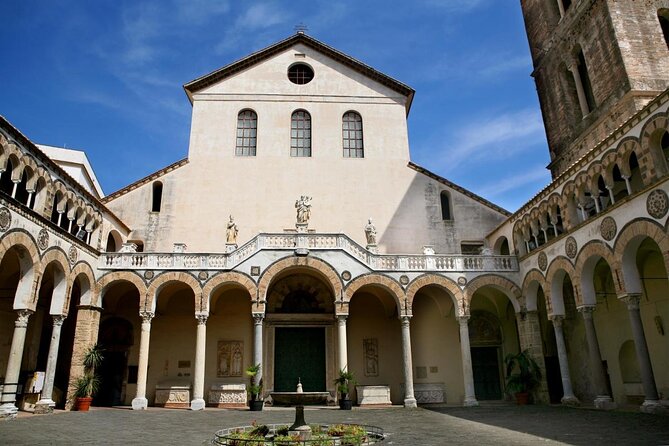
And then you arrive at the Duomo di Salerno, formally the Cattedrale di Santa Maria degli Angeli, San Matteo e San Gregorio VII. The emphasis here is on Romanesque features, especially the atrium and the precious ambos.
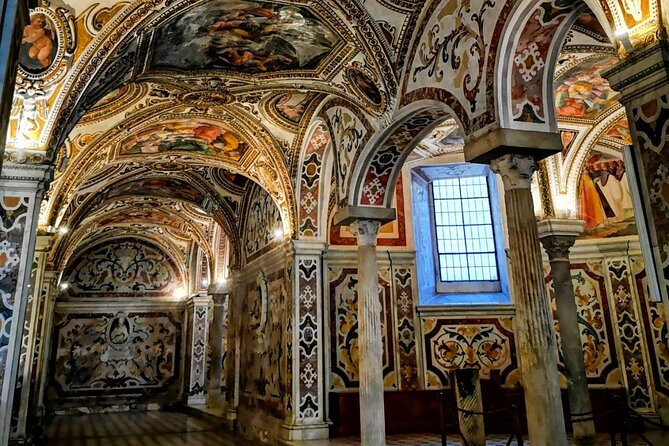
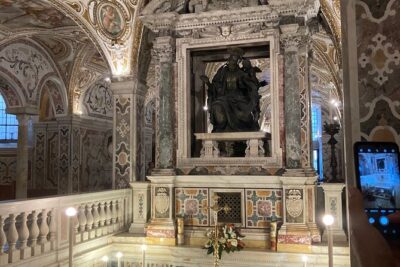
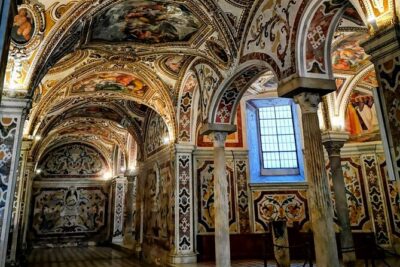
The most standout part for many people is the crypt dedicated to the Evangelist Apostle St. Matthew. Even without getting lost in architectural jargon, a crypt naturally changes the mood. You move from open street-level energy into the quieter, older feeling that comes with a sacred underground space.
This ending is great because it satisfies two kinds of travelers. If you want monuments, you get a major one. If you want story, you get a clear conclusion tied to the street route that got you there.
Craft stores, myths, and the kind of tips that pay off later
This tour includes a stop at local craft stores. The point is not shopping pressure, it’s getting a human connection to everyday Salerno. A guide who knows the city can point out what makes local crafts meaningful, and what might make a good souvenir that does not look mass-produced.
Myths and legends are also part of the experience, and that matters more than it sounds. When a guide adds a legend at the right moment, it helps you remember the place. It also makes the city feel lived-in rather than locked behind museum glass.
One review highlight was how the guide shared tips about modern life in Salerno, plus food ideas for extra time. That is a big reason walking tours can beat “just see the sights” tours. If you have even a small window left after the walk, your day can feel planned instead of accidental.
If you like travel where the guide gives you tools, this is your kind of tour. You walk away with a sense of where to go next, what to try, and how to recognize the city’s character outside the main monuments.
Price and time value, $53 for a focused 105 minutes
At $53 per person for about 1.5 hours, this tour sits in a “good orientation” category. You are paying for a licensed guide, city context, and a route that links the modern station to medieval alleys and finally to the Duomo.
The duration is short enough to work even if you are doing other things in Campania that day. You do not need a half-day commitment to get value. For many people, that makes the price feel fair because you are buying time saved, not just commentary.
One thing to plan for: entrance fees are not included. That’s normal for tours that focus on guided viewing and interpretation. If any of the stops you want to spend extra time in require a paid entry, you will need to purchase on site.
The best value usually comes when you take the tour as a base layer for your day. Use it to get your bearings, learn what matters, then spend any remaining time on the streets and viewpoints that resonate with you.
Comfort notes: stairs, hearing, and how to get the most out of the group
This is a walking tour, and some people specifically warn to be ready for stairs. That means good shoes help, and it also means you should not assume a gentle stroll the whole time.
If your group is small, it can actually be a plus for questions and pacing. One review mentioned a group of four, which often makes the experience feel more conversational. Still, keep expectations realistic. You are moving through historic streets where surfaces can vary.
Hearing is another practical point. There was at least one note that it was hard to hear the guide, so do yourself a favor and stay closer rather than at the far edge of the group. If you care about every detail, that position can make a bigger difference than you might think.
Meeting point clarity also helps. You start at the Maritime Station entrance at Travel Point, so arriving a few minutes early is smart. That way, you are not stressed when it’s time to begin.
Who this Salerno walking tour fits best
This tour is a strong match if you want a guided walk through the historic center without turning it into an all-day checklist. You get the big anchor sights, but the guide also knits them together with myths, legends, and the Salerno Medical School theme.
It also fits travelers who like context and practical suggestions. When a guide shares ideas for modern life and food, you tend to make better decisions after the tour, not just during it.
If you are very sensitive to stairs or want a completely flat route, this may be less comfortable. The tour is also not suitable for people over 95, so it’s worth checking your group’s needs before committing.
Should you book this Salerno Walking Tour?
I would book it if you want a tight, meaningful route that connects Salerno’s maritime arrival, medieval lanes, and a major Romanesque finale at the Duomo. The $53 price makes sense when you factor in guide-led storytelling, a structured walk, and time well spent in just 105 minutes.
Skip it if you need a low-walking, no-stairs option, or if you usually prefer to explore completely independently without any guide narration. Also consider your comfort with audio and hearing, since staying near the front can help you get the most out of the guide’s explanations.
FAQ
How long is the Salerno walking tour?
The tour lasts about 1.5 hours, listed as 105 minutes.
Where do I meet the guide?
You meet at the Maritime Station Entrance, Travel Point (Stazione Marittima di Salerno).
What languages are available for the live guide?
The tour is offered with live guides in Italian and English.
Does the price include entrance fees?
No. Entrance fees are not included and, if needed, you would buy them on site.
Is transportation included in the tour?
No transfers are included, and the tour is done on foot starting from the city center area.
What is the cancellation policy?
You can cancel up to 24 hours in advance for a full refund.
Freshly added to the coast
- Paestum Temples and Mozzarella Experience★ 5.0 · 1 review
- Amalfi Coast Hike and Wine Tour in Vietri★ 5.0 · 1 review
- Boat Tour to Capri with visits to the Island, Caves, Faraglioni★ 5.0 · 1 review
- 4-hour boat tour of the Amalfi Coast & Li Galli Islands★ 4.0 · 1 review
- Amalfi Coast by Private Boat – Full-Day High-End Coastal Escape★ 5.0 · 1 review
- Amalfi Coast to Rome with stop at Pompeii or Vice Versa★ 5.0 · 1 review
- Small Group Market tour and Cooking class in Vietri Sul Mare★ 5.0 · 1 review
Amalfi Coast Walking Tours, compared.
Discover Salerno: Walking Tour with an Expert Local Guide
Read our review →
Walking Tour Vietri Sul Mare: ceramics town on the Amalfi Coast
Read our review →
Walking tour from Minori to Maiori along the Path of the Lemons
Read our review →
Private Tour: Amalfi Valle delle Ferriere Nature Reserve Walking Tour
Read our review →Browse the lists this tour appears in