
Reviewed · VIETRI SUL MARE CERAMICS TOURS
Private Lesson on the Ceramic Tradition in Vietri sul Mare
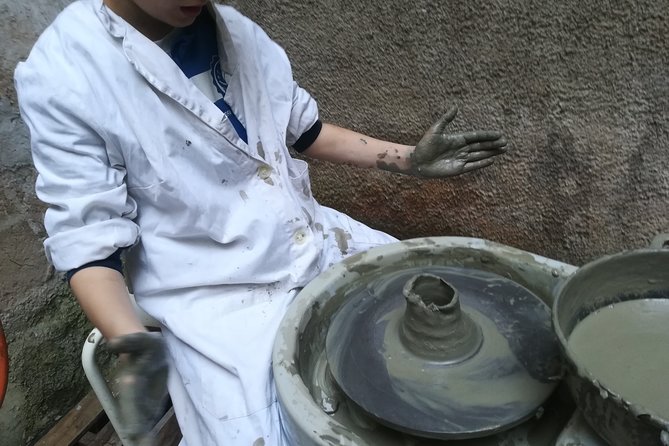
One hour, and your hands learn clay. In Vietri sul Mare, this private ceramic tradition lesson puts you right at the potter’s wheel, so you can feel wet clay move under your fingers and watch a shape form fast, with Elvira guiding you through the basics. It is hands-on, it is personal, and it is an easy fit for a day in Salerno’s coast towns.
I especially love how much real wheel time you get for such a short class. The teaching focuses on basic positions and technique, so even if you are brand new, you are not stuck watching from the sidelines. I also love that the lesson connects craft to place, with Elvira explaining the importance of ceramics for Vietri sul Mare while you work.
One thing to plan for: your finished piece needs drying time, and keeping it can come with extra logistics. You can end up with a work you love, but you may not be able to treat it like a souvenir you toss in your bag the same day.
In This Review
- Key moments worth showing up for
- Vietri sul Mare ceramics, taught the way craft should be
- Where Pulcinella Sciòroom fits into a day in Vietri sul Mare
- Meeting Elvira: why this lesson feels easy to start
- The potter’s wheel basics: learning pressure, angles, and control
- Making your small cup: what you can realistically expect in one hour
- Drying and taking your piece home: the real-world logistics
- Time, group size, and language: getting value from a private lesson
- Price and value: is $35 a good deal for ceramics in Vietri sul Mare?
- What to wear and bring so the clay day stays pleasant
- Who should book this ceramics lesson
- Should you book this private ceramic tradition lesson in Vietri sul Mare?
- FAQ
- How long is the ceramic lesson in Vietri sul Mare?
- Where do we meet for the lesson?
- Is the lesson taught in English?
- How many people are in the group?
- Can I participate if I have never done pottery before?
- Do I get to keep what I make?
- What is the cancellation policy?
Key moments worth showing up for
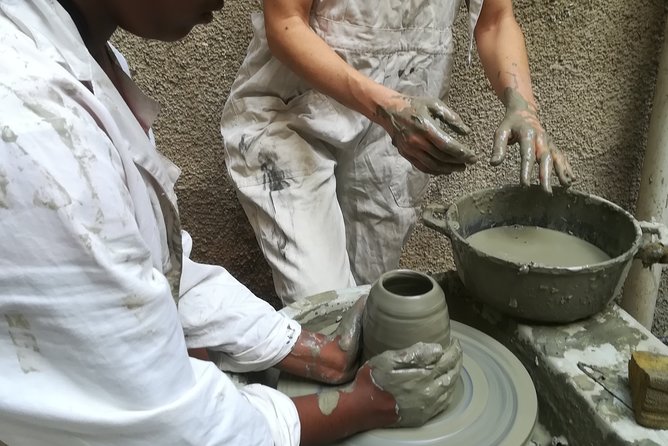
- A true potter’s wheel lesson, not just a paint-and-pray workshop
- Elvira’s hands-on coaching, with lots of patience for beginners
- You make at least one small cup, with help when you get stuck
- You will get wonderfully dirty, so dress for clay, not for dinner
- Small group size up to 3, so questions do not get lost
- You learn why ceramics matters in Vietri sul Mare, tied to the city’s culture
Where the coast's painted tiles come from
- Private Ceramic Workshop in Vietri Sul Mare
★ 5.0 · 44 reviews - Paestum Traditions, Buffaloes, Ceramics, Temples
★ 5.0 · 24 reviews - Walking Tour Vietri Sul Mare: ceramics town on the Amalfi Coast
★ 5.0 · 23 reviews - Share your Pasta Love: Small group Pasta and Tiramisu class in Vietri sul mare
★ 5.0 · 16 reviews
Vietri sul Mare ceramics, taught the way craft should be
If you like experiences that go beyond photos, this one fits. Vietri sul Mare is famous for ceramics, and this lesson treats pottery as a skill, not a party trick. You do not just learn what clay is. You learn how it behaves when it spins, when it is wet, and when your hands are still getting the hang of the pressure and angles.
The magic here is physical. The wheel is fast, the clay is alive in your fingers, and when it finally starts to sit right, you get that satisfying feeling of control. People often join expecting a short demo. What they get is a chance to do the work, with the teacher stepping in when your piece needs saving.
The class is also well-suited for a short stop. It runs about 1 hour, which means you can fit it without reorganizing your entire day in Salerno.
Where Pulcinella Sciòroom fits into a day in Vietri sul Mare
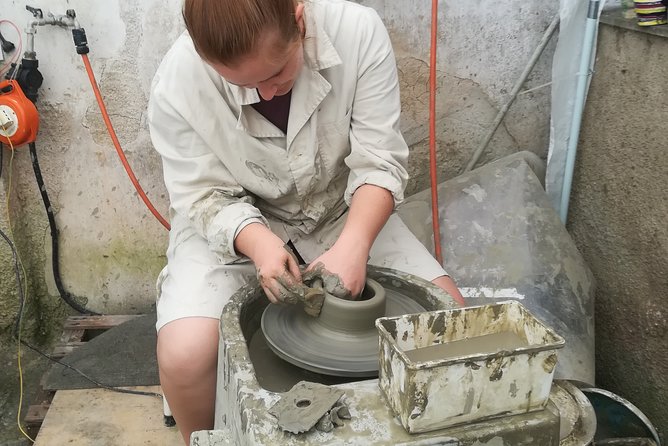
You meet at Pulcinella Sciòroom on Corso Umberto I, 102, right in Vietri sul Mare. It is in the middle of town, close to the ceramic shops and restaurant strip, so you are not trekking out to an industrial studio way outside your sightseeing route.
Two practical bonuses matter here. First, the location is near public transportation, so you are not trapped by taxi schedules. Second, the activity ends back at the meeting point, which keeps your afternoon simple. You can come, make your cup, then walk off to browse shops or grab a coffee without figuring out a second transport plan.
When you arrive, expect a welcome and a calm teaching space. Some guests note the teacher offers coffee and water on arrival, and that matters more than it sounds when you are about to handle wet clay and do focused work for an hour.
Meeting Elvira: why this lesson feels easy to start
The teacher for this experience is Elvira, and that name comes up again and again in the feedback. What you should take from that is not just friendliness. It is teaching style.
Elvira’s coaching is described as clear, patient, and structured. Even when people are very new, she helps them keep going. That is important because pottery is one of those crafts where the first attempts can be frustrating if the instruction is vague. Here, the basics are broken into manageable parts, so you spend less time guessing and more time trying.
Also, she works in English, and she may mix in Italian occasionally. That flexibility helps if your Italian is basic and you just want to understand exactly what to do with your hands.
The potter’s wheel basics: learning pressure, angles, and control
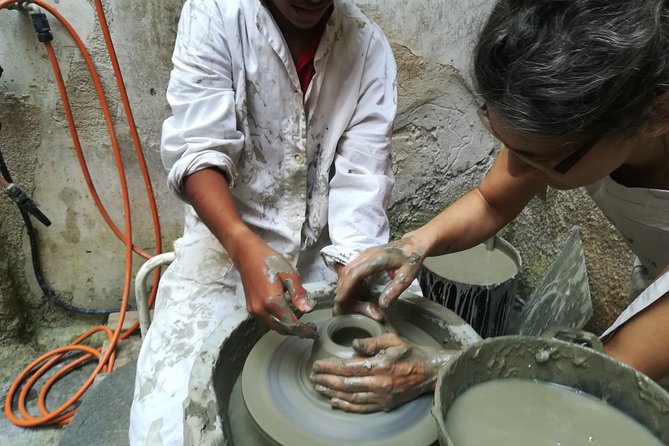
This is a potter’s wheel class, and the learning is very practical. You start with the basic positions you need. Then you get to the part everyone talks about: the feel of wet clay running fast under your fingers as the wheel spins.
Here is what that means in real terms for you:
- You learn how to hold your hands so the clay stays centered.
- You practice steady pressure rather than squeezing or jerking.
- You get a feel for how quickly things change when the clay is moving.
That tactile learning is the whole point. Pottery is hard because it involves timing plus touch. In a one-hour lesson, you will not master throwing like a studio professional, and the class does not pretend otherwise. What you can do is start building muscle memory, and that is what makes you walk away feeling like you actually learned something.
Most people also notice the emotional side. Getting your hands dirty and wrestling with a spinning mass of clay can feel like a small stress release. The wheel forces you to slow down and focus. You stop thinking about everything else because you need to pay attention to what the clay is telling you.
Make something before you leave
- Cortecorbo winery: Pizza Cooking class, lunch & wine tasting★ 5.0 · 34 reviews
- Private Cooking Class at a Cesarina’s Home in Salerno★ 5.0 · 11 reviews
- Ceramic Lesson for Small Groups in Vietri sul Mare★ 5.0 · 10 reviews
Making your small cup: what you can realistically expect in one hour
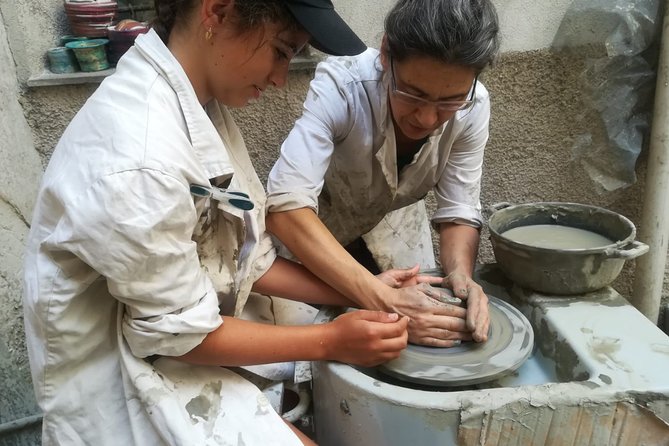
Your goal in this lesson is to make at least one small cup, with help from Elvira. That is the right promise for a beginner class. You are not pushed toward a complicated vessel. You are guided toward something achievable that still feels like real pottery.
The challenge is that pottery takes time. Clay needs practice, and the wheel skills improve with repeated hours. That is why the teaching emphasizes basics and guided progress, not perfection.
You will likely spend your hour doing a mix of:
- learning the technique,
- trying it yourself,
- adjusting when the clay behaves differently than you expect,
- and finishing the form so it becomes a piece you can be proud of.
One more thing that comes up: you may be able to create more than one item depending on how your session goes. Some guests report making two pieces with help. Still, plan around the main target, one small cup, so you do not feel rushed if your clay needs extra attention.
Drying and taking your piece home: the real-world logistics
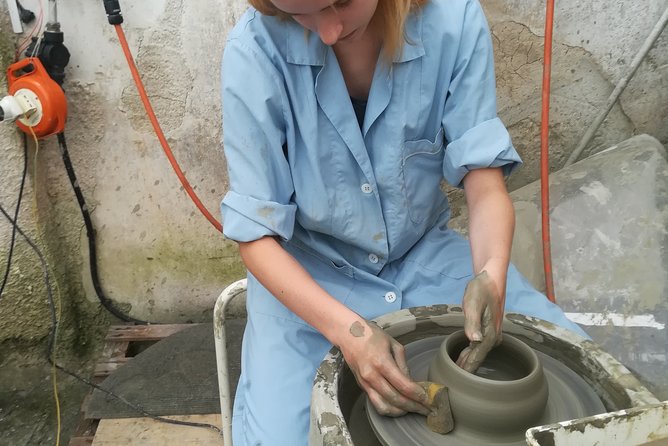
The class is fun while you are there. The next part is where planning saves disappointment.
Clay needs drying time, and you cannot treat a fresh piece like a finished souvenir. In fact, multiple comments mention that you will need time to dry and may need shipping back home to keep your work. Some people also mention that there may be an extra cost for shipping.
If you want the smoothest experience, think about this like a small project with a timeline. You are not just making something in an hour. You are creating a piece that has to finish drying and be handled safely.
A practical tip from the way guests describe the experience: if you are not sure you want to handle shipping, you could consider options like buying a pre-made item while leaving your thrown piece with the teacher for finishing later. That kind of flexibility is something you can ask about directly.
Time, group size, and language: getting value from a private lesson
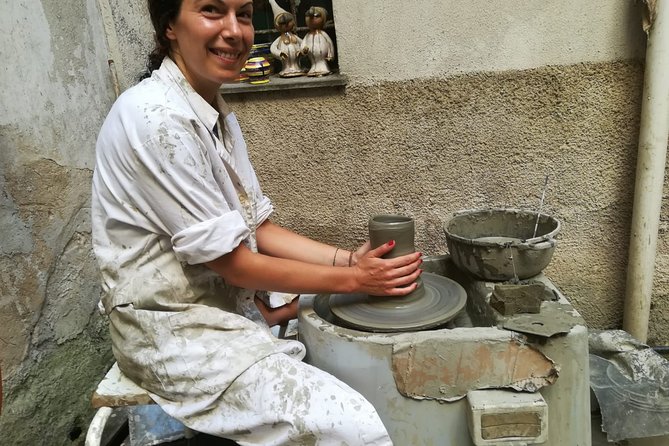
This is a private lesson experience, with a maximum of 3 travelers. That small size matters. Pottery needs correction at the moment you are doing it. If the group is too big, you lose the chance for quick feedback and you spend the session waiting.
With up to three people, you can get individualized help while still keeping the class light and personal. People also mention the teacher allows you to do most of the work yourself, while still stepping in when things need guidance. That balance is ideal. You build confidence because you are not just receiving a finished product. You also avoid the total sink-or-swim problem that beginners face.
Language-wise, the session is offered in English. That helps you follow the instructions without guessing. If you have questions about technique, you will likely understand the explanation clearly enough to adjust your hands in real time.
Finally, think about the session length. It is about 1 hour. The class does not feel like it is rushed, but it is also not a full-day workshop. If you are the kind of person who instantly wants more time at the wheel, ask during your booking or at the start of class whether extra time is possible.
Price and value: is $35 a good deal for ceramics in Vietri sul Mare?
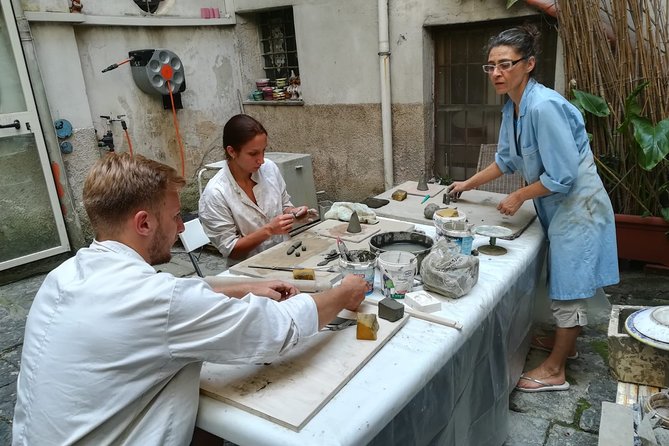
At $35 per person for an about-one-hour private wheel lesson, you are paying for three things: instruction, time at the wheel, and a finished (or at least started) ceramic piece process.
The value is strongest if you are new or curious. Beginners usually get the most benefit because the teacher can fix the most common issues early. If you already throw clay every week, you might want a longer studio session. But for most visitors, an hour is the sweet spot where you learn enough to feel proud and leave with a piece that represents the experience.
Also, the small group cap of 3 helps justify the price. It is not a large class where everyone takes turns. It is structured so you are not waiting your turn as much.
The only potential value drop is the follow-up cost of keeping your piece. If you need shipping, that can add expense. If you want your piece mailed home, budget for that part. If you are okay with managing logistics, then the $35 lesson becomes a very cost-effective way to learn a real skill instead of doing a passive activity.
What to wear and bring so the clay day stays pleasant
This is the kind of activity where your clothes matter. Clay gets everywhere. The lesson is designed to teach with wet clay under your fingers, so you should treat the experience like a hands-on craft day, not a polished museum stop.
Wear something you do not mind getting dirty. Long sleeves can help, and closed-toe shoes are a practical choice when you are standing and leaning.
What about bringing items? The session is short, so the simplest plan is:
- bring a small bag or crossbody you can keep close,
- bring water if you prefer, even if you are offered coffee and water,
- and dress for comfort because you will be using your hands constantly.
If you are carrying a camera or phone, keep it secure. Wet clay and phone screens do not mix.
And most important, plan your rest of the day with the drying and shipping reality in mind. Your trip schedule should not rely on having a finished ceramic piece fully ready to pack that same hour.
Who should book this ceramics lesson
This class is a good fit for:
- Couples looking for a break from typical sightseeing.
- Honeymoon travelers and day-trippers who want one meaningful hands-on activity.
- Beginners who want instruction instead of a do-it-yourself craft night.
- Anyone who likes learning how local traditions connect to everyday life.
It is also great if you enjoy calm focus. The wheel work is repetitive in a good way. It gives you a task that pulls your attention away from stress, and you can measure progress in real time as the clay responds.
The biggest mismatch is if you want a quick souvenir with zero follow-up. This lesson is about making, and your piece needs finishing steps afterward. If you cannot deal with drying or shipping logistics at all, you might want to ask about alternatives before you commit.
Should you book this private ceramic tradition lesson in Vietri sul Mare?
Yes, if you want a real skill experience you can actually participate in. For a reasonable price, you get hands-on potter’s wheel time, patient instruction from Elvira, and a clear outcome goal of making a small cup. The small group size makes the coaching feel personal instead of rushed.
Book it if you can handle two realities: you will get dirty, and your piece likely involves drying and possible shipping to keep it. If that sounds fine, you will leave with more than a photo. You will leave with the satisfying knowledge of how clay moves under your hands, plus a piece that came from your own effort.
If you are on the fence, send a quick message about shipping and drying timing. That one question can help you feel confident that your ceramic souvenir plan fits your trip.
FAQ
How long is the ceramic lesson in Vietri sul Mare?
It runs for about 1 hour.
Where do we meet for the lesson?
You meet at Pulcinella Sciòroom, Corso Umberto Iᵒ, 102, 84019 Vietri sul Mare SA, Italy.
Is the lesson taught in English?
Yes, it is offered in English.
How many people are in the group?
The class has a maximum of 3 travelers.
Can I participate if I have never done pottery before?
Most travelers can participate, and the lesson is focused on learning the basic positions on the potter’s wheel, with help from the teacher.
Do I get to keep what I make?
You will help make at least one small cup, but you should plan for drying time and possible extra shipping costs if you want it sent home.
What is the cancellation policy?
You can cancel up to 24 hours in advance for a full refund. If you cancel less than 24 hours before the start time, the amount you paid is not refunded.
Freshly added to the coast
- Amalfi Coast Hike and Wine Tour in Vietri★ 5.0 · 1 review
- Boat Tour to Capri with visits to the Island, Caves, Faraglioni★ 5.0 · 1 review
- Paestum Temples and Mozzarella Experience★ 5.0 · 1 review
- 4-hour boat tour of the Amalfi Coast & Li Galli Islands★ 4.0 · 1 review
- Amalfi Coast by Private Boat – Full-Day High-End Coastal Escape★ 5.0 · 1 review
- Amalfi Coast to Rome with stop at Pompeii or Vice Versa★ 5.0 · 1 review
- Small Group Market tour and Cooking class in Vietri Sul Mare★ 5.0 · 1 review
Vietri sul Mare Ceramics Tours, compared.
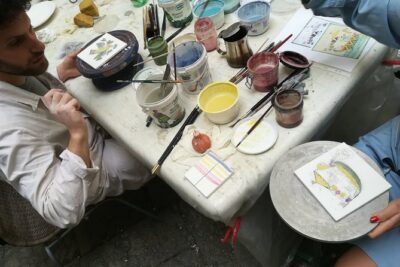

Paestum Traditions, Buffaloes, Ceramics, Temples
Read our review →
Walking Tour Vietri Sul Mare: ceramics town on the Amalfi Coast
Read our review →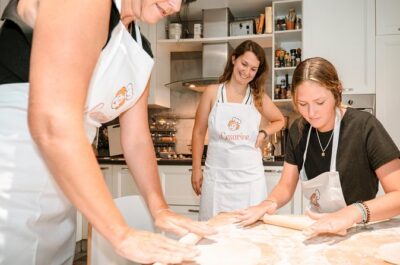
Share your Pasta Love: Small group Pasta and Tiramisu class in Vietri sul mare
Read our review →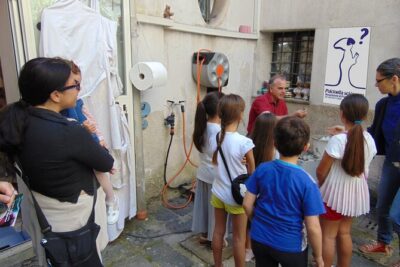
Ceramic Lesson for Small Groups in Vietri sul Mare
Read our review →
Tour of Vietri and its villages on board the Ape Calessino (tuktuk)
Read our review →
Small Group Market tour&Dining Experience at Cesarina’s home in Vietri sul Mare
Read our review →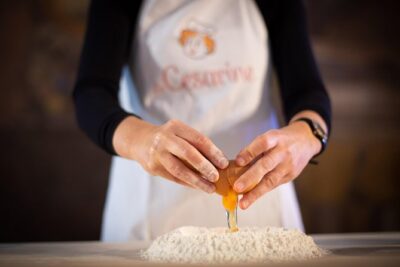
Private cooking class with lunch or dinner in Vietri sul Mare
Read our review →Browse the lists this tour appears in