
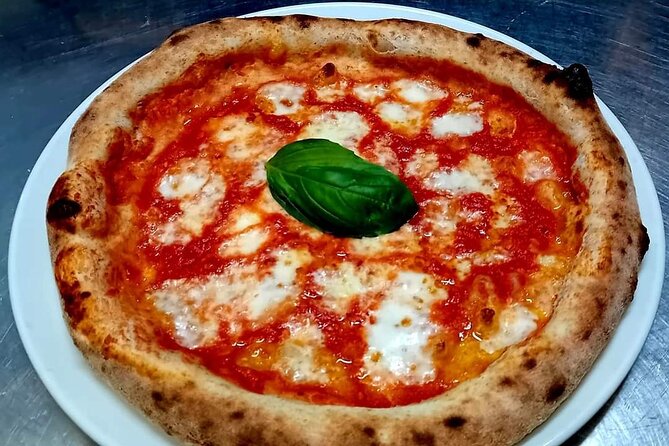
Reviewed · PIZZA MAKING ON THE AMALFI COAST
Pizza Course
Pizza in Tramonti hits different.
This small-group course in Tramonti, just outside the busiest Amalfi lanes, mixes a quick overview of Tramonti pizza with real dough work and a tasting at the end. You start at a local facility, then move from garden firsts to hands-on bread making, all before you sit down to eat the results.
I love how the class blends practical steps with context, not just a how-to. I also like that you get a hands-on dough session, led by Roberto and collaborators, plus a final tasting so you can connect what you learned to what you taste.
One consideration: at $215.51 per person, this is a planned, pay-for-it experience. If you mainly want a casual snack stop, it may feel pricey for what you get.
In This Review
- Key things I’d circle before you book
- Pizza Course in Tramonti: a 3-hour class with real momentum
- Meeting point at Putechella (5:30 pm): why the location feels local
- Phase 1: the 0 km garden, then Tramonti pizza history and dough basics
- Phase 2: hands in the dough, making loaves you actually transform
- Phase 3: tasting the territory you just worked with
- Price and value: $215.51 for a 3-hour workshop with small-group limits
- Group size and what it means for your experience
- Who should book this pizza course in the Amalfi area?
- Should you book? My practical decision guide
- FAQ
- What is the duration of the Pizza Course?
- Where is the meeting point?
- What time does the course start?
- How many people are in the group?
- Do I get a mobile ticket?
- How much does it cost per person?
- Is free cancellation available?
- What happens during the course?
Key things I’d circle before you book
- 0 km vegetable garden start so you begin with local inputs, not just theory
- Tramonti pizza origins and dough techniques in the first phase
- Hands-on dough making where you form real loaves, not just watch
- Typical Tramonti products for seasoning based on what you choose
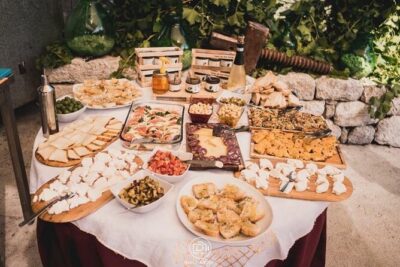
- Tasting at the end so the class doesn’t end at the oven door
- Max 15 travelers for a more personal, workshop feel
Learn the dough, eat the result
- Amalfi Coast: Pizza & Mozzarella Class with Farmhouse visit
★ 5.0 · 98 reviews - Hands-On Pizza Making Class & Farmhouse Tour with Sea Views
★ 5.0 · 58 reviews - Pizza Class experience on Amalfi coast
★ 5.0 · 27 reviews - Pizza Tasting in Amalfi with Panorama
★ 5.0 · 6 reviews
Pizza Course in Tramonti: a 3-hour class with real momentum
This is a 3-hour pizza course in the Tramonti area of the Amalfi Coast, with a clear flow that helps you stay focused. The schedule is split into three phases: some background, then you get hands-on with the dough and loaves, then you finish with a tasting.
That structure matters because pizza classes can go two ways. Some are mostly talk. Others are mostly cooking with little context. Here, you get both, which helps the session feel like a craft lesson instead of a one-off activity.
Also, the timing helps. Starting at 5:30 pm, the course fits well for a dinner-in-the-air kind of day. You’re not rushing a midday schedule, and you’re not stuck trying to squeeze in cooking after a long travel day.
Meeting point at Putechella (5:30 pm): why the location feels local
You meet at Putechella, Piazza Padre Pio, 2, 84010 Tramonti SA, Italy, and the activity ends back at the same meeting point. That round-trip setup is simple, and it saves you from trying to figure out where you are after the class.
This part of the Amalfi Coast is quieter than the most famous hotel strips and viewpoints. The value here is that you’re doing pizza-making in a real working setting tied to the Tramonti food scene. In practice, that usually means fewer tour-bus vibes and more of a workshop feel, which lines up with what many people seek on a day trip.
If you are basing yourself farther along the coast, plan for transit time. It’s worth treating this as a day-trip style outing, not a quick add-on.
Phase 1: the 0 km garden, then Tramonti pizza history and dough basics
The first portion begins right away with a tour of the 0 km vegetable garden. That choice is more than pretty pictures. It sets the tone: pizza here is tied to local ingredients, and you start with the idea that the dough and toppings are part of a regional system.
Then Roberto and collaborators move into the theoretical part. You’ll learn about the history of Tramonti pizza, its origins, and the dough techniques used to get the texture right. You also cover the role of raw materials, which matters because pizza dough is not just flour and water. Small differences in ingredient choices and handling can change the final crumb and chew.
Practical takeaway for you: pay attention during this phase. If you spend the hands-on segment zoning out, you’ll miss the few key reasons the dough behaves the way it does. The class is designed so the theory prepares you for what you’ll feel in your hands later.
A possible drawback in any workshop with a theory segment: if you prefer pure hands-on activity with minimal talk, the first phase may feel a bit slower. Still, the pace is set up for you to move quickly into making, which helps.
Phase 2: hands in the dough, making loaves you actually transform
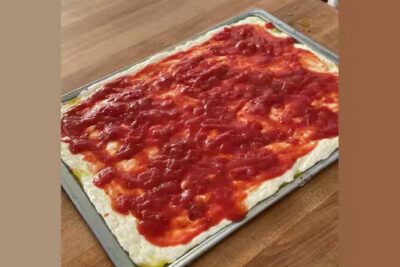
The second phase is where this course becomes memorable. You’ll put your hands in the dough and make a real dough with the transformation and cooking of the loaves. That phrasing is important. You’re not only mixing or shaping. You’re part of the whole process chain, including the steps that lead toward cooking.
For many people, the big win is learning how dough responds. You feel changes in elasticity and structure as the dough is handled, and you learn how shaping and timing affect the end result. That’s the kind of knowledge that sticks, because it’s physical. You can remember theory, but you really remember what your hands learned.
Then comes seasoning. You’ll season the loaves as desired with typical products of Tramonti. Since the course calls out your ability to choose, it suggests the tasting is built around those choices, too. That’s a good design detail: it keeps the final meal connected to your earlier decisions.
A small practical tip: wear comfortable clothes. Dough work can be messy, and the course is workshop-style, not show-and-tell.
Pair this with something else along the water before you close the tab.
- Hands-On Cooking Class & Farmhouse Tour on the Amalfi Coast★ 5.0 · 956 reviews
- Amalfi Coast & Positano: Boat Tour with Snorkeling & Drinks★ 5.0 · 671 reviews
- Amalfi Coast: Sunset Boat Tour with Fruit & Drinks★ 4.8 · 463 reviews
Phase 3: tasting the territory you just worked with
The tasting phase is the payoff. After you make and season the loaves, you get to taste the excellence of the territory. It’s not just eating for the sake of it. It’s how you connect the dots between ingredients, dough handling, and how the pizza turns out.
This is also where you can reset your brain after the hands-on work. Cooking sessions can blur together, especially if you are hungry. A structured tasting gives you a clean moment to evaluate what you made and what you learned.
One more subtle value point: the course is tied to Tramonti. That means you’re not just learning a generic pizza technique. You’re being steered toward local identity, which can make the experience feel more grounded to place.
If you are a foodie who likes to understand why something tastes the way it does, this final step is the moment it becomes more than hands-on fun. If you’re mostly in it for the social part, you’ll still get that, but the tasting is what converts the workshop into a full experience.
Price and value: $215.51 for a 3-hour workshop with small-group limits
The price is $215.51 per person for a roughly 3-hour course. That’s not budget travel territory, so the honest question is value.
Here’s how I’d judge it: you are paying for (1) a guided garden-to-oven experience, (2) a structured three-phase class that includes making dough and loaves, and (3) a final tasting where you get the full result. Add in the maximum of 15 travelers, which usually means you get closer attention than in a big group event.
The average booking lead time is also a clue. This is booked about 84 days in advance on average, which suggests people plan this as a meaningful activity, not a spontaneous filler. If you wait too long, you might miss dates, especially if you’re traveling in peak season.
Bottom line: this is good value if you want an actual cooking workshop tied to local food identity. It’s less compelling if your main goal is only to eat a single pizza without caring about technique.
Group size and what it means for your experience
With a cap of 15 travelers, the class is designed to stay interactive. That matters during dough work. When groups are bigger, you often spend time waiting, watching, or standing around. Here, the structure implies you’ll have enough hands-on time to make the lesson feel real.
That small-group setting also affects comfort. If you’re someone who needs to ask questions to get it right, you’ll likely have more chances to clarify what you’re doing while the session is happening.
The flip side: because it is limited to 15, fewer spots mean less flexibility. If you have very specific travel timing, booking earlier is smart.
Who should book this pizza course in the Amalfi area?
This course fits best if you want a cooking class that connects technique, ingredients, and local identity. It’s a strong choice for:
- People who like small-group classes more than big sightseeing programs
- Food-focused day trips where you prefer hands-on learning
- Couples or friends who want a shared activity that ends with eating
It may not be the best match if:
- You only want a quick snack and don’t care about dough handling
- You prefer tours that start later in the evening, since the start time is 5:30 pm
- You dislike any structured theory segment before cooking
Also, if you are planning a longer Amalfi stay, consider making this an anchored activity. A workshop like this can help break up the cycle of viewpoints and boat rides with something grounded and practical.
Should you book? My practical decision guide
I’d book this if you are the type who enjoys learning by doing. The three-phase format, starting with the 0 km garden and ending with a tasting, is the kind of structure that turns a pizza class into an experience with memory value.
It’s also a good pick if you want something that feels less like a standard tourist stop. The Tramonti location and the small group limit both point toward a calmer, more focused vibe, which lines up with the single standout review rating of 5 out of 5.
Skip it if the price makes you hesitate, because it’s not priced like a casual workshop. And if you’re not interested in dough work or local Tramonti seasoning, you’ll probably feel like you paid for parts you didn’t use.
FAQ
What is the duration of the Pizza Course?
The course lasts about 3 hours.
Where is the meeting point?
You meet at Putechella, Piazza Padre Pio, 2, 84010 Tramonti SA, Italy.
What time does the course start?
The start time is 5:30 pm.
How many people are in the group?
The maximum group size is 15 travelers.
Do I get a mobile ticket?
Yes, the tour offers a mobile ticket.
How much does it cost per person?
The price is $215.51 per person.
Is free cancellation available?
Yes. You can cancel for a full refund if you cancel at least 24 hours before the experience starts.
What happens during the course?
It includes a garden visit, a first phase with pizza history and dough techniques, a second hands-on phase making dough and preparing/cooking loaves with Tramonti products, and a third phase tasting what you made.
Freshly added to the coast
- Hydrobike Amalfi★ 5.0 · 1 review
- Amalfi Coast Private Boat Tour from Minori, Maiori & Amalfi★ 5.0 · 1 review
- Transfer from Positano to Naples or Vice Versa★ 5.0 · 1 review
- Explore Capri or the Amalfi Coast in a day★ 5.0 · 1 review
- Visit of Pompei and Wine Tasting with Lunch from Amalfi★ 5.0 · 1 review
- Pompei: Private tour from the Amalfi Coast★ 5.0 · 1 review
- private transfer from priano to naples★ 5.0 · 1 review
Pizza Making on the Amalfi Coast, compared.
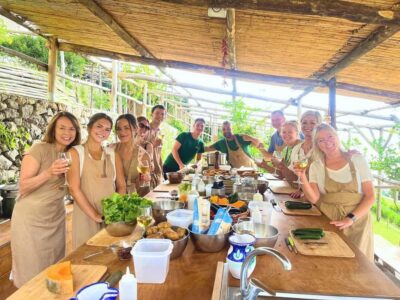
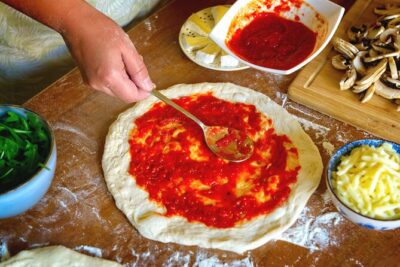
Hands-On Pizza Making Class & Farmhouse Tour with Sea Views
Read our review →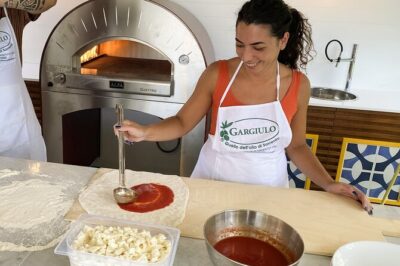
Cortecorbo winery: Pizza Cooking class, lunch & wine tasting
Read our review →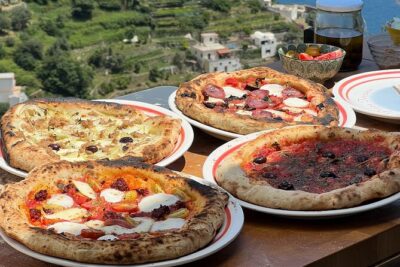
Pizza & Tiramisu with Stunning Positano Terrace Views by Cesarine
Read our review →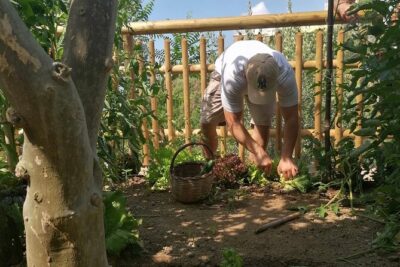
Pizza e Tiramisù class with local mum in Positano
Read our review →Browse the lists this tour appears in